
Clean & Minimal AI Powered Fitness Routines
Download AppIntermediate Hamstring Flexibility
A 25-minute flexibility session to improve hamstring length and posterior-chain mobility.
Intermediate Hamstring Flexibility
A 25-minute flexibility session to improve hamstring length and posterior-chain mobility.
Warm-Up
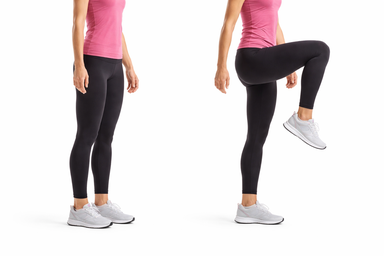
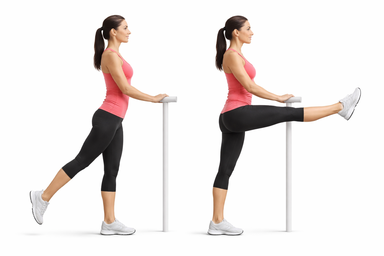
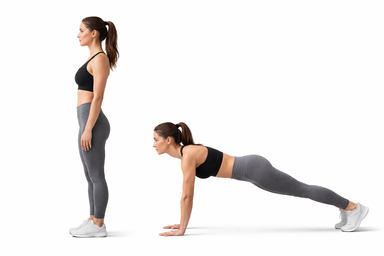
Dynamic preparation. Increase blood flow and gently prepare the hamstrings and hips for longer holds.
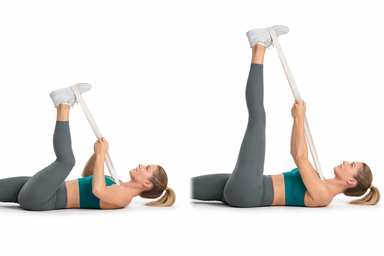
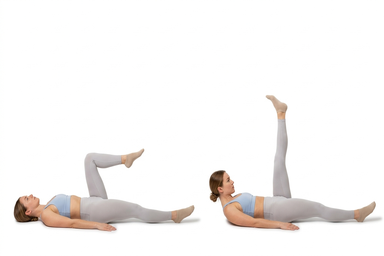
Supine Floss
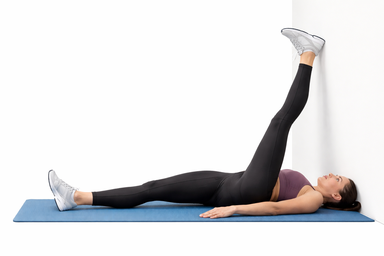
Keep the low back neutral; use the strap/towel to avoid yanking on the leg.
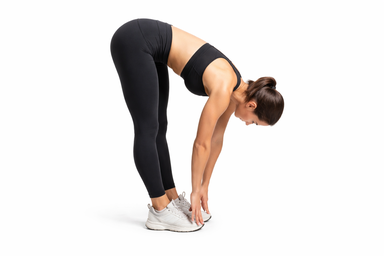
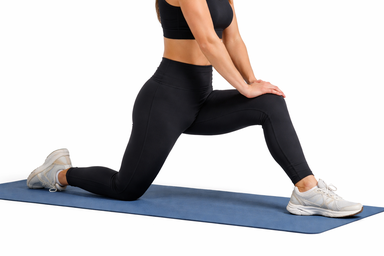
Hip Hinge Half Split
Hinge from the hips; keep a soft knee if needed.
Long Holds
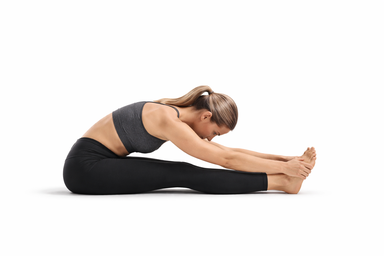
Relax the shoulders and jaw; exhale to ease deeper without forcing.

Neural vs. Muscular Tension in Your Stretches
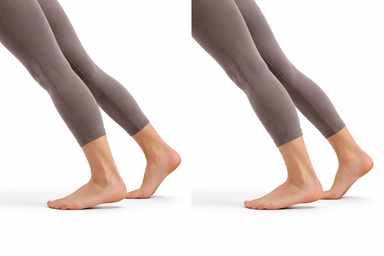
This routine separates contractile tissue work from neural mobilization — the Hamstring Nerve Glide targets sciatic nerve mobility, while the Half Split and Seated Forward Fold address actual muscle extensibility. Most hamstring tightness is 60% neural guarding, which is why the nerve floss earns its place before your deepest passive holds.

Why Hamstrings Resist Lengthening So Stubbornly
The hamstrings cross two joints — hip and knee — making them uniquely prone to chronic shortening from seated postures and repetitive hip-flexion-dominant movement. The Wall Hamstring Stretch and Supine Strap work exploit this dual-joint architecture by isolating pelvic tilt, removing lumbar compensation that masks true hamstring range.

Dynamic-to-Static Sequencing Is Doing Real Work
March in Place and Leg Swings elevate tissue temperature and synovial fluid viscosity before any loaded lengthening begins — cold connective tissue resists deformation and risks micro-tearing. To personalize, extend your Inchworm hold by 3–5 seconds when posterior-chain stiffness feels high; this amplifies the myofascial release before your passive floor work.