
Clean & Minimal AI Powered Fitness Routines
Download AppAcute Low Back Flare-Up — 25 Minutes
A gentle, intermediate low-back flare-up session focused on pain-calming breathing, mobility, and core/hip support (~25 min).
Acute Low Back Flare-Up — 25 Minutes
A gentle, intermediate low-back flare-up session focused on pain-calming breathing, mobility, and core/hip support (~25 min).
Settle Symptoms
Downshift the nervous system and find a comfortable spine position before strengthening. — Breathing and gentle motion.



Extension Options
If extension feels good, do both. If unsure, start with prone_on_elbows only. — Choose comfortable range.


Strength & Stability Circuit
Slow tempo, neutral spine. Rest as needed between exercises.



Decompress & Gentle Stretch
Finish with easy hip stretching to reduce protective tension.


Directional Bias Built Into Every Rep
Cobra Press-Up and Prone on Elbows load your lumbar spine into extension, the most common pain-relieving direction during a posterior disc flare. This isn't random—extension bias centralizes referred symptoms, while Cat-Cow primes segmental mobility before you load.

Why Flare-Ups Shut Down Your Core First
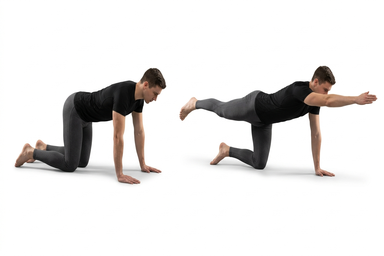
Acute low back pain reflexively inhibits your multifidus and deep stabilizers within hours of onset—before you even feel weakness. Bird Dog and Dead Bug specifically re-recruit that local stabilizer system under low load, bypassing the global muscle guarding that makes pain worse.

Sequencing Pain Down Before Building Support
The three-section arc here follows a neurological logic: Diaphragmatic Breathing downregulates your sympathetic threat response first, then directional loading centralizes symptoms, then Glute Bridge and Clamshell restore hip-to-spine force transfer. If Cobra increases leg symptoms, reverse the progression and stay in Cat-Cow longer.