
Clean & Minimal AI Powered Fitness Routines
Download AppIntermediate Scapular Stability
A 25-minute scapular control session to build stronger, more stable shoulders.
Intermediate Scapular Stability
A 25-minute scapular control session to build stronger, more stable shoulders.
Warm-Up
Prepare the upper back and shoulder blades for controlled loading. — Scapular and thoracic mobility work.
Circuit A
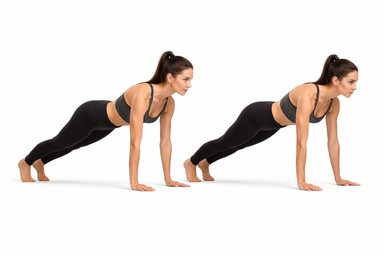
Control the shoulder blades: reach/protract, then return without shrugging.
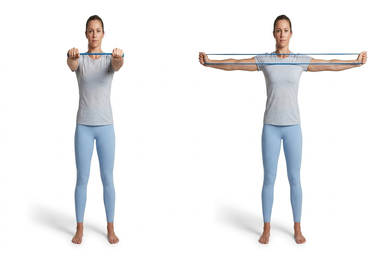
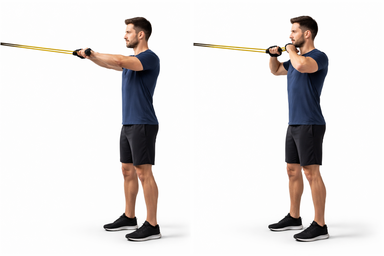
Circuit B
Keep elbows tucked and shoulders down/back; move slowly and pause briefly at end range.
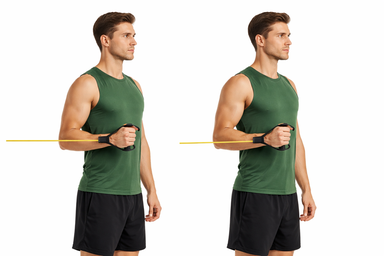
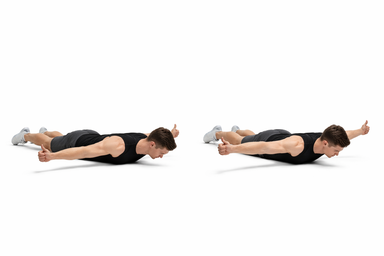
Cool-Down
Reinforce posture and finish with controlled holds. — Reset and integrate.

Serratus, Traps & the Force Couple
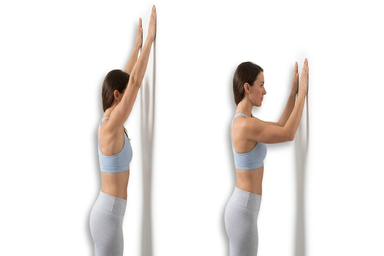
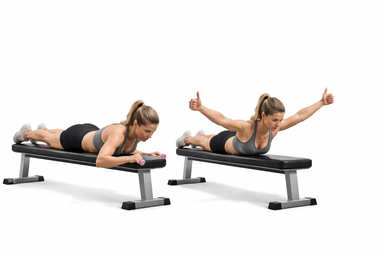
Wall Slides and Scapular Push-Ups directly train serratus anterior, the muscle responsible for scapular upward rotation and protraction control — the most undertrained link in shoulder health. Prone Y and T Raises then load the lower and middle trapezius, completing the force couple that keeps your scapula tracking cleanly against the ribcage under load.

Why Scapular Dyskinesis Derails Everything
Poor scapular control reduces the subacromial space, creating impingement risk during any overhead or pressing movement — whether you're lifting, swimming, or sitting at a desk for eight hours. Band Face Pulls and External Rotation work target the rotator cuff's posterior envelope, the tissue most responsible for humeral head centration when your shoulder is under stress.

Circuit Structure as Neuromuscular Rehearsal
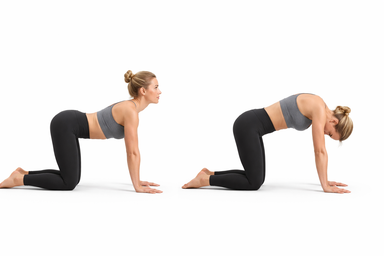
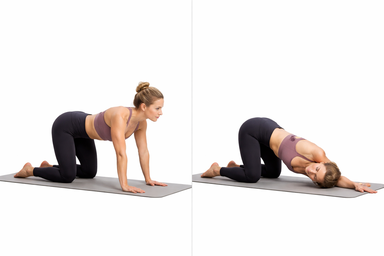
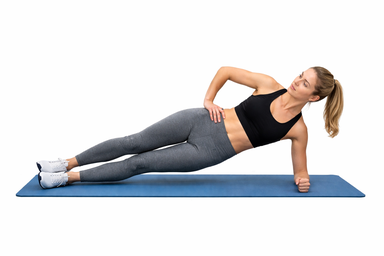
The warm-up's Cat-Cow and Thread the Needle sequence unlocks thoracic rotation first, because a stiff t-spine forces the scapula to compensate — making everything downstream less effective. Progress this routine by adding one band resistance level every two weeks, and use the Side Plank as your benchmark: if scapular winging appears under lateral load, you've found your current stability ceiling.